What Is the Meaning of Survivalism?

What Survivalism Actually Means
Survivalism is not just about extreme disaster scenarios. At its core, it is about preparedness and independence. Survivalists focus on building skills, storing supplies, and developing the ability to survive situations where normal systems like food supply, electricity, or government services may be unavailable.
It is a practical mindset centered on resilience. Rather than living in fear, survivalists take concrete steps to reduce their vulnerability to disruptions — from power outages and natural disasters to economic instability and supply-chain breakdowns.
Want the Complete Homestead Roadmap?
Skip years of trial and error. Get the complete step-by-step system for building a profitable, sustainable homestead.
Get the BookSurvivalism vs Homesteading
While they overlap, they are not the same. Survivalism focuses on short-term survival during emergencies — having the supplies, skills, and plans to endure disruptions. Homesteading focuses on long-term self-sufficiency as a lifestyle — producing food, generating energy, and building independent systems day after day.
Many modern people combine both approaches. They maintain a homestead for daily self-reliance while also keeping emergency supplies and plans for worst-case scenarios. The two philosophies complement each other well.
Free: First-Year Homestead Roadmap (PDF)
A printable 12-month roadmap broken into 4 simple seasons. Sent instantly to your inbox.
No spam — unsubscribe anytime.
Why People Become Survivalists
Common reasons include economic uncertainty, natural disasters, desire for independence, and lack of trust in fragile systems. Some people start after experiencing a personal emergency — a hurricane, a job loss, or a grid failure — and realizing how vulnerable they were.
Others are drawn to survivalism by a broader sense that modern life depends on increasingly complex and fragile systems. They want a buffer: extra food, water, skills, and plans that give them options when things go wrong.
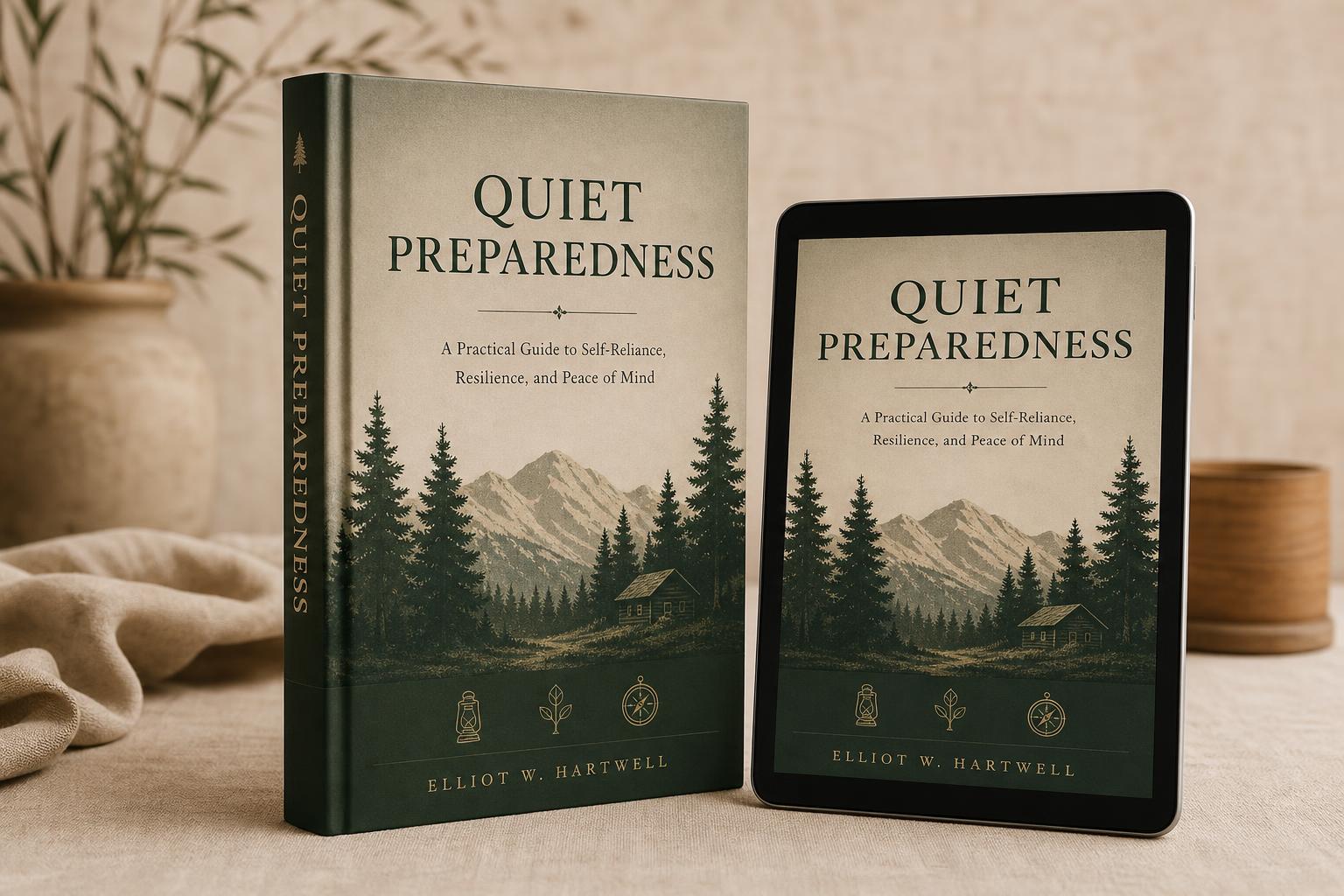
Quiet Preparedness — Physical + Digital Book Bundle
The complete beginner-friendly companion to this article. Plain-language, no hype.
See what's inside — $37Core Focus Areas of Survivalism
Most survivalists concentrate on a few key pillars: food and water storage to bridge supply disruptions, emergency preparedness including plans and kits for likely local risks, self-defense awareness for personal and family security, basic medical knowledge to handle injuries when professional help is delayed, and off-grid survival skills like fire-starting, shelter-building, and navigation.
You do not need to master all of these at once. Many successful survivalists start with a two-week food and water reserve, a basic first-aid kit, and a written family emergency plan. Those three items put you ahead of most households.
Your First Step Toward Self-Reliance
Pick one likely emergency in your area — a winter storm, hurricane, earthquake, or power outage — and build a 72-hour kit for it. Include water, non-perishable food, a flashlight, a first-aid kit, and copies of important documents. That single kit is the foundation of everything that follows.
If you want a structured way to build real self-reliance without overwhelm, the Quiet Preparedness book bundle walks through emergency planning, food storage, skill-building, and homestead systems step by step — designed for ordinary families, not extreme preppers.
Ready to Build Your Homestead the Smart Way?
The Quiet Preparedness book bundle gives you everything you need to skip the guesswork and build a homestead that actually works.
- Land selection strategies
- Income planning worksheets
- Homestead startup roadmap
- Equipment checklists
- Financial planning templates
- Self-sufficiency planning guides
Recommended Tools
Vetted picks that pair well with this guide. Some links are affiliate links — they cost you nothing extra and help support the journal.
Beginner's Homestead Planner
A printable 90-day planner to map your first homestead milestones.
Get the plannerQuiet Preparedness Book Bundle
Physical + digital guide to practical self-reliance for ordinary families.
View the bundleHomestead Skills Field Notebook
Weatherproof notebook for tracking harvests, livestock, and projects.
Check priceDownload: Free Homestead Starter Checklist (PDF)
A one-page printable checklist to help you set up your first homestead system.
No spam — unsubscribe anytime.
Frequently Asked Questions
Build quiet self-reliance — one step at a time.
The Quiet Preparedness book bundle is the full step-by-step companion to everything on this site.
- Physical book shipped to your door
- Instant digital access included
- Beginner-friendly, no hype

Written by
Quiet Prepared Editorial Team
We're a small team of beginner-friendly homesteaders and writers focused on practical, fear-free guidance for families building real self-reliance.


